How do I know if my boiler needs Replacing?
- Oct 03, 2020
- 3
Has your boiler seemingly broken down overnight? Do not panic, your condensate pipe may just be frozen from cold weather conditions. For tips on locating the blockage to restarting your boiler, please follow our useful tips below and your home will be warm, nice and cosy again in no time!
Metal piping cannot be used for your boiler installation. For that reason, the condensate pipe is relatively easy to find. It will be the only plastic pipe connected to your boiler. Outside, the condensate pipe should be a relatively short length of pipe that connects directly to your drainage system, and should also be steeply angled to ensure that other waste water, for example from appliance outflows, is not able to travel up it.
It will often emerge at around the same height as your window sills. Ideally, it will be well clad but this may not always be the case, especially in a country like the UK where we are not used to extreme cold.
The first warning that your boiler condensate pipe is frozen will usually be that you discover that you have no hot water or heating. This can occur even if your boiler was working fine the night or week before. You may also hear an unfamiliar gurgling sound coming from your boiler. On closer inspection of the boiler control panel, you will find that the boiler has stopped operating. If the condensate pipe has become frozen, the boiler's sensors will detect that it has become blocked and prevent the boiler from operating. This is a normal safety precaution to prevent damage to the boiler.
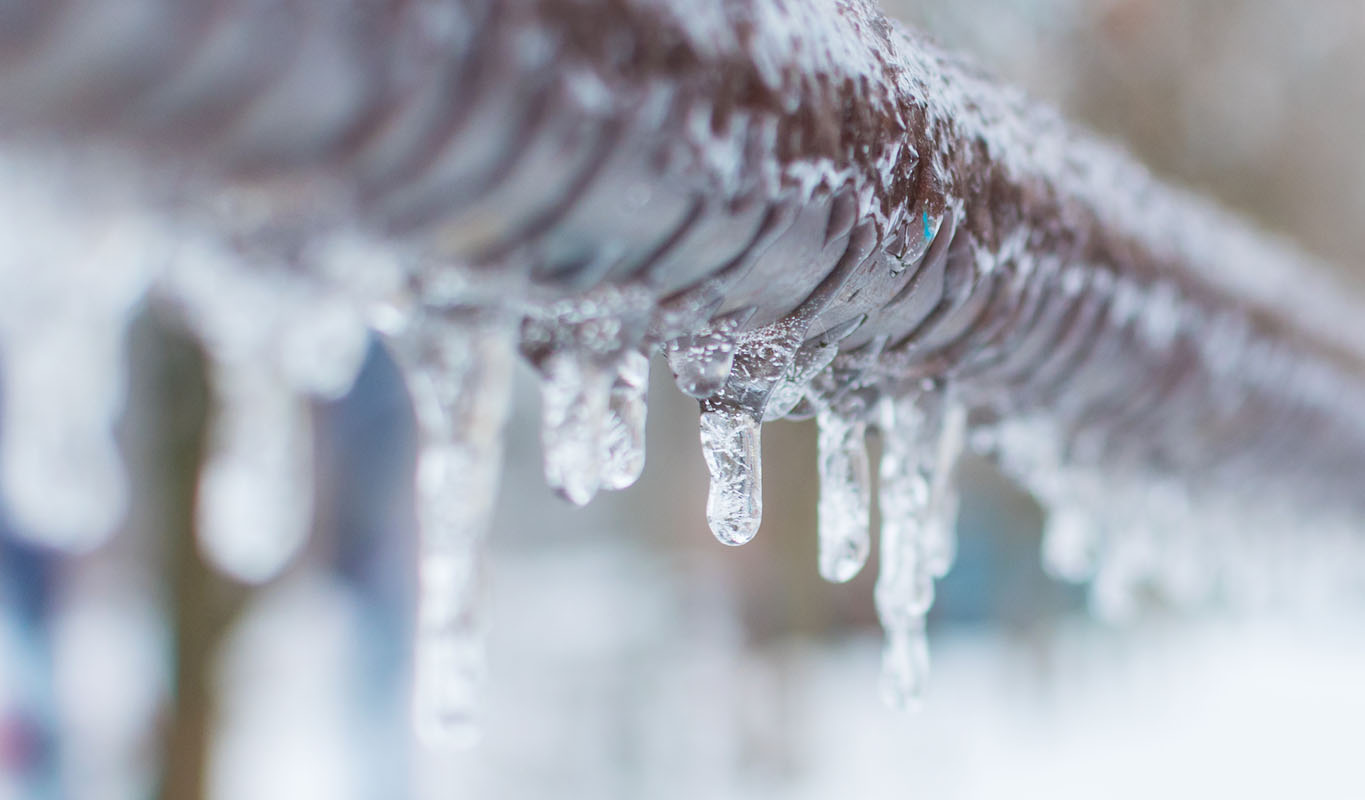
Once you have located the boiler condensate pipe, the next step - if you are confident to do so - is to try and unblock the frozen section.
NEVER attempt to cut or remove the boiler condensate pipe. It is generally considered to be part of your gas boiler's flue system, which means that only a Gas Safe Engineer is legally authorised to perform physical work on the pipe itself.
a).Prepare some warm to hot water using a kettle or microwave. Transfer the hot water to a suitable container such as a watering can or a jug. Do not use boiling water as this is an accident risk in cold conditions and can cause damage to the pipe.
b).Pour the water over the section(s) of pipe that you believe are frozen. If the pipe's outlet is fully or partially frozen, start there as it will allow any water that has gathered elsewhere in the pipe to escape once it is able to. After this, it is recommended to pour hot water on any flat sections or elbows as these typically freeze faster.
c).If this is not sufficient to melt the ice inside, you may try using a hot water bottle. This will allow heat to be applied to the frozen section for a longer period of time. Ideally, you will see water begin to leave the pipe or hear a trickling sound.
d).Once you believe the blockage has melted, you can attempt to reset the boiler. If you were successful, any fault codes will be cleared and the boiler should restart.
Be sure to reset your boiler in accordance with the manufacturer's instructions. If you get into trouble or have further doubt after you try to rectify the problem, give Bristol Plumber 24/7 a call and we'll send out a trained specialist to you.